One year ago, as part of a plan to expand the capacity of the Internet’s domain name system, the Internet Corporation for Assigned Names and Numbers (ICANN) began accepting applications for more generic top-level domain names (gTLDs). Currently, the well-known gTLDs include .com, .org, and .net, as well as some of the country indicators that have been repurposed, such as .tv and .es. Adding gTLDs will allow for exponentially more domain names. During the new gTLD application period, ICANN opened the door to any combination of three or more letters in most major alphabets: .blue, .school, .mcdonalds, .law or .商城. The possibilities might seem almost endless, but, on “Reveal Day,” ICANN disclosed a list of 1,930 applications for new gTLDs
One year ago, as part of a plan to expand the capacity of the Internet’s domain name system, the Internet Corporation for Assigned Names and Numbers (ICANN) began accepting applications for more generic top-level domain names (gTLDs). Currently, the well-known...
In what has been described by some as over-zealous enforcement of copyright, BMG (the large German publisher) forced YouTube to take down a Mitt Romney campaign video because it included footage of President Obama singing Al Green’s “Let’s Stay Together.”
In what has been described by some as over-zealous enforcement of copyright, BMG (the large German publisher) forced YouTube to take down a Mitt Romney campaign video because it included footage of President Obama singing Al Green’s “Let’s Stay...
The United States has yet to reach an agreement over the Google digital books project, but France, a literary haven and copyright devotee, has forged ahead.
With what its supporters have praised as a tool for bringing out-of-print books into the hands of new readers, the Google digital books project has sought to digitally scan collections of current and out-of-print books to create a massive digital collection on Google’s database.
The United States has yet to reach an agreement over the Google digital books project, but France, a literary haven and copyright devotee, has forged ahead. With what its supporters have praised as a tool for bringing out-of-print books into the hands of new readers,...
Last month Google announced a new addition to its website’s Transparency Report.
Google has decided to release information on the number of requests it recieves from copyright owners (and the organizations that represent them) to remove Google Search results that allegedly link to infringing content.
Google’s senior copyright counsel Fred von Lohmann writes on Google’s blog, “We believe that openness is crucial for the future of the Internet. When something gets in the way of the free flow of information, we believe there should be transparency around what that block might be.”
Last month Google announced a new addition to its website’s Transparency Report. Google has decided to release information on the number of requests it recieves from copyright owners (and the organizations that represent them) to remove Google Search results...
Over the past decade, websites and Internet Service Providers (ISPs) have learned to rely on the takedown procedures of the Digital Millennium Copyright Act (DMCA) in order to generally avoid copyright infringement liability imposed by content owners.
ISPs have been able to shield themselves from all liability form their users posting infringing material by having a proper takedown system in place. But, a recent Second Circuit case undermines that level of confidence in takedown procedures.
The Second Circuit Court of Appeals is the first U.S. court to decide that ISPs may still be liable for copyright infringement even after complying with the takedown provisions of the DMCA.
Over the past decade, websites and Internet Service Providers (ISPs) have learned to rely on the takedown procedures of the Digital Millennium Copyright Act (DMCA) in order to generally avoid copyright infringement liability imposed by content owners. ISPs have been...

 The United States has yet to reach an agreement over the Google digital books project, but France, a literary haven and copyright devotee, has forged ahead.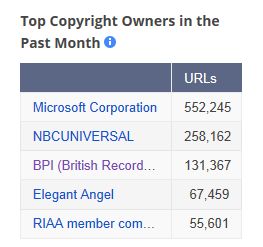
Recent Comments