Lizbeth Hasse and Erin Brinza of Creative Industry Law were acknowledged in The Hollywood Reporter, Variety magazine and numerous other news outlets for their contributions in providing legal support to film producer Rudy Langlais in connection with a new film financing structure in Antigua. The new structure was announced at the Toronto Film Festival earlier this month.
Lizbeth Hasse and Erin Brinza of Creative Industry Law were acknowledged in The Hollywood Reporter, Variety magazine and numerous other news outlets for their contributions in providing legal support to film producer Rudy Langlais in connection with a new film...
Often our clients are faced with the situation in which they intend to pay someone to create copyrightable content for them in connection with their businesses. This arises frequently in the entertainment industry and related tech businesses as well, as it is becoming a common practice to simply hire an independent contractor to create content where it is too expensive, burdensome, or impossible to create such content oneself. For example, companies frequently engage contractors to design their logos and other graphic elements for their company branding and websites. Other content creators, such as filmmakers, television producers, authors, and musicians, engage the services of others to create portions of their final artistic products (writing music, creating animation or illustrations, etc.).
Often our clients are faced with the situation in which they intend to pay someone to create copyrightable content for them in connection with their businesses. This arises frequently in the entertainment industry and related tech businesses as well, as it is...
Every once in a while, we as attorneys will be asked by a client to sign a nondisclosure agreement prior to a meeting or initial consultation. These nondisclosure agreements—commonly referred to as NDAs—serve the purpose of protecting a party’s confidential business and financial information by placing a contractual duty on the other party not to use or disclose that information. Clients have been told again and again by lawyers and other advisors that anyone they share confidential business information with should first be asked to sign an NDA to protect them.
Every once in a while, we as attorneys will be asked by a client to sign a nondisclosure agreement prior to a meeting or initial consultation. These nondisclosure agreements—commonly referred to as NDAs—serve the purpose of protecting a...
Those in the initial stages of developing branding for their businesses or rolling out new product or service names or slogans find themselves in the position of attempting to select a trademark that is both legally protectable and marketable. Many of my clients with business experience are able to determine what makes a trademark strong from a marketing perspective. However, many business people forget to take into account that what is strong from a branding perspective may not be the best choice of trademark for legally protecting your brand.
Those in the initial stages of developing branding for their businesses or rolling out new product or service names or slogans find themselves in the position of attempting to select a trademark that is both legally protectable and marketable. Many of my clients...
So you want to start a company. Which business structure are you going to choose?
There are quite a few options available, but four of the main business entity types will be discussed in this post: sole proprietorship, partnership, limited liability company and corporation. While there are specific tax implications and filing requirements associated with each of these business structures, I will be focusing on the general characteristics of each entity type.
Sole Proprietorship
So you want to start a company. Which business structure are you going to choose? There are quite a few options available, but four of the main business entity types will be discussed in this post: sole proprietorship, partnership, limited liability company and...
My past two blog posts in the basic IP terminology series have addressed copyright and trademark, respectively. This third and final installation of the series will cover the area of trade secret law and what type of information can constitute a protectable trade secret.
What is a Trade Secret?
Under the Uniform Trade Secret Act (UTSA), which has been enacted by most states (including California) and the District of Columbia, a trade secret has three basic components:
It consists of information of some kind (such as a formula, pattern, compilation, program, device, method, technique or process);
Basic IP Terminology—What is a Trade Secret? My past two blog posts in the basic IP terminology series have addressed copyright and trademark, respectively. This third and final installation of the series will cover the area of trade secret law and what...
Earlier this month, I posted the first blog entry in my basic IP terminology series about copyright. This time, we’ll take a look at what exactly a trademark is and what the benefits are of protecting and registering your trademark.
What is a Trademark?
Trademark and copyright are often confused by those who are unfamiliar with how IP rights are distinguished.
A trademark is a word or design (like a logo) that is used in a branding capacity to indicate to consumers the source of the particular product or service that is being offered to the public.
Basic IP Terminology Series—What is a Trademark? Earlier this month, I posted the first blog entry in my basic IP terminology series about copyright. This time, we’ll take a look at what exactly a trademark is and what the benefits are of protecting...
Hasse has provided guidance and trouble-shooting for a wide variety of legal and practical matters, from negotiating protocols with the former Soviet ministries to setting up non-profit joint venture agreements with each partner medical center in Russia, navigating customs issues and educating Russian lawyers about charitable/nonprofit legal organizational matters.
BASF Bulletin, Dec. 30, 2014
Heart to Heart International Children’s Medical Alliance recently honored her for her 25 years of pro bono service as the organization’s General Counsel. Hasse has provided guidance and trouble-shooting for a wide variety of legal and practical matters,...
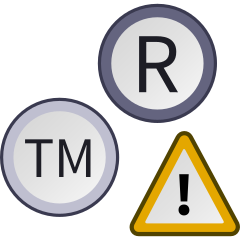
Everyone is familiar with trademarks—those logos, slogans, and brand names we come across every day— but not everyone knows the difference between the TM symbol and the ® symbol.
If you haven’t noticed it before, a very small “TM” in bold, UPPERCASE or a small r-in-a-circle symbol (“®”) appears in superscript, most often in the upper right hand corner of a trademark.
If you claim rights to use a trademark, applying the correct symbol designation serves to notify your competitors of the type of trademark rights you have in your mark. In the event that you sue someone who is using your trademark without your permission, failure to provide proper notice of your trademark in this way may result in your inability to obtain money damages or recover your court costs.
Everyone is familiar with trademarks—those logos, slogans, and brand names we come across every day— but not everyone knows the difference between the TM symbol and the ® symbol. If you haven’t noticed it before, a very small “TM” in...
Many people, especially those in the initial stages of their business or project, are unsure of how to describe and understand the intellectual property (IP) rights that are created in the course of running their business.
IP rights of some kind arise in virtually every type of business venture, and being able to wrap your head around those rights is a good first step toward protecting and monetizing them. So, what do you call the rights that you own?
What is Copyright?
Basic IP Terminology—What is Copyright? Many people, especially those in the initial stages of their business or project, are unsure of how to describe and understand the intellectual property (IP) rights that are created in the course of running their business....









 Heart to Heart International Children’s Medical Alliance


Recent Comments